Recovery from your own nights
Last night's HRV, resting heart rate and time asleep, each compared with your previous 30 nights. A four-number formula, calibrated against the author's WHOOP history.
7.2 points mean error on 101 days it never saw
Pulse talks to a WHOOP strap over Bluetooth, decodes its heart rate, beats, motion, steps and skin temperature, and scores sleep, recovery, activity and heart rhythm with its own algorithms, trained on public datasets and run on the phone.
An independent personal project, not affiliated with WHOOP. Built for the author's own strap, and published so others can learn from it.
Sunday, 29 November
Good morning
Today's read
Ready to push
Your body has recovered well. HRV is +26% vs your baseline.
Live
62bpm
Live HRV
48 ms
What it does
Pulse decodes the strap's own records, every second, and builds its scores from them with models you can read, retrain and check.
Last night's HRV, resting heart rate and time asleep, each compared with your previous 30 nights. A four-number formula, calibrated against the author's WHOOP history.
7.2 points mean error on 101 days it never saw
Pulse finds every sleep and nap from movement and heart rate, then estimates wake, light, deep and REM. No clock time is used, so a day sleep counts like a night. Keep, edit or delete what it found.
Onset within 4 min of the sleep lab (median)
Looks for the irregularly irregular beat pattern of atrial fibrillation in the strap's beat intervals, mostly at rest and asleep. A suggestion to take an ECG, never a diagnosis.
29 of 30 AF recordings flagged
41 sports, GPS routes for 13 of them, and a Live Activity on the Lock Screen. Forgot to press start? Pulse spots walks, runs and rides and asks if you want to save them.
Both recorded walks found to the minute
About once a second from the strap, with live HRV as RMSSD over the last five minutes of clean beats. Steps come from the strap's own counter.
Writes the strap's heart rate, vitals, sleep and workouts with their routes to Apple Health, and skips what another app already wrote.
Recovery, strain, sleep and heart rate on the Home Screen, recovery on the Lock Screen, and a Live Activity while a workout records.
Optional: connect Reflect, a personal health record, and ask questions about your days. Its agent sees your wearable data next to labs and medicines. Off until you sign in.
A notification when your overnight resting heart rate is unusually high two nights in a row, a rule chosen on the Stanford COVID-19 wearables data. Not a diagnosis.
39 % of illnesses caught, 0.35 false alarms per 30 nights
Every minute belongs to exactly one day: activity from midnight to midnight, a sleep on the day you wake up, one main sleep per day, naps where they happen. No double counts.
How it works
The strap's data service needs an encrypted bond. The iPhone already has one from the WHOOP app, and Pulse uses it. By default Pulse only listens alongside the WHOOP app; an opt-in Direct mode downloads the history itself.
One record per second: heart rate, the clean beat intervals in that second, the accelerometer and the step counter; skin temperature every 10 s. Stored in SQLite on the phone, raw frames kept so new fields can be decoded later.
Small boosted trees, trained in Python on public datasets and exported as generated Swift. The same test vectors are checked in both languages, so the app computes exactly what was evaluated.
The Lab
Each algorithm's data, features, results and limits, written up from the repository's own notes, with the datasets, the trained model files and the references.
Hardware
Concept · not built yetA working design for a screenless band in the spirit of WHOOP and MG: heart rate, HRV, an SpO₂ trend, single-lead ECG, skin temperature, motion, steps and sleep, haptic alarms and days of storage, syncing to Pulse over Bluetooth. Clean-room: its own documented protocol, nothing from WHOOP's protocol, firmware or name.
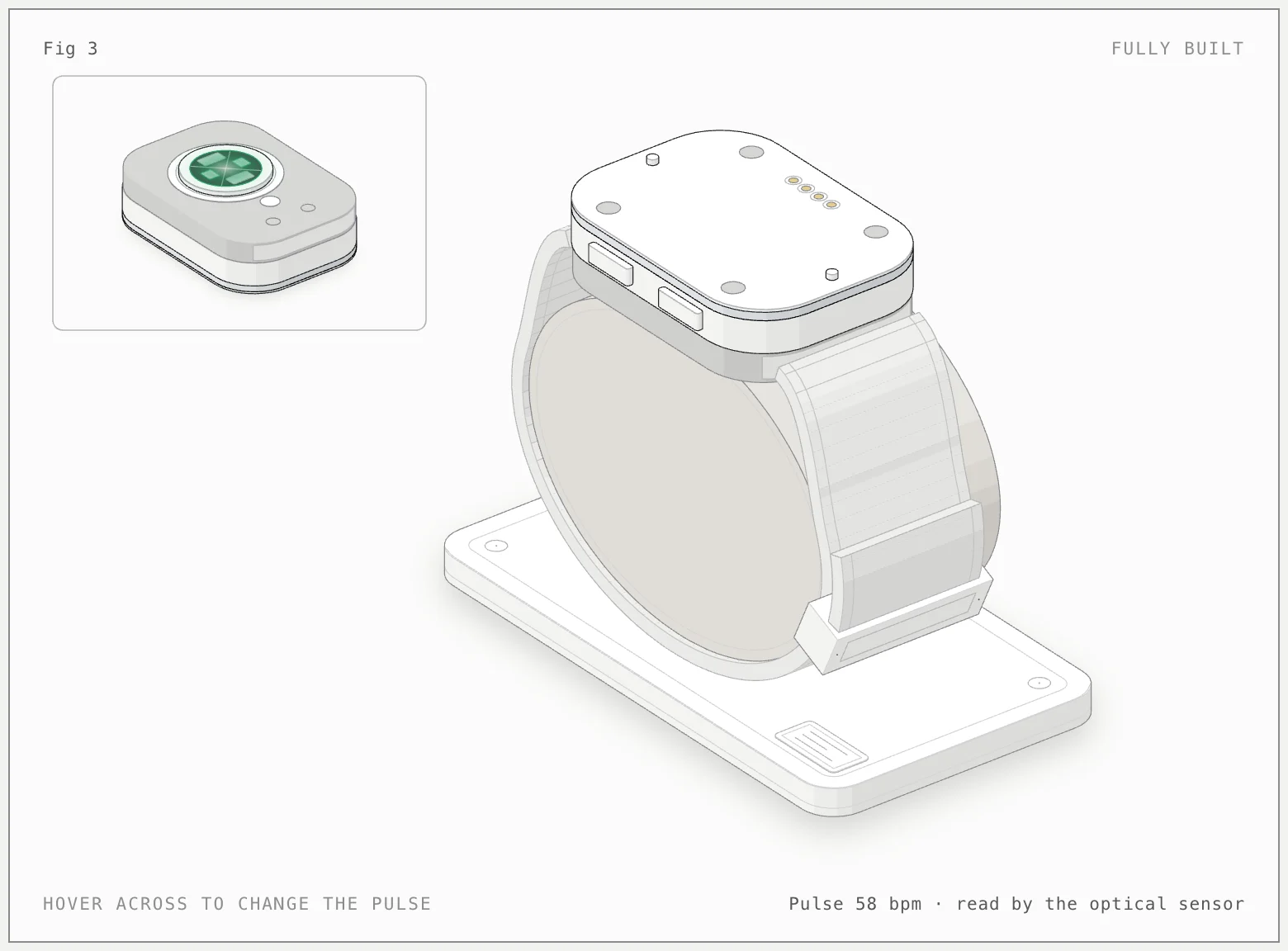
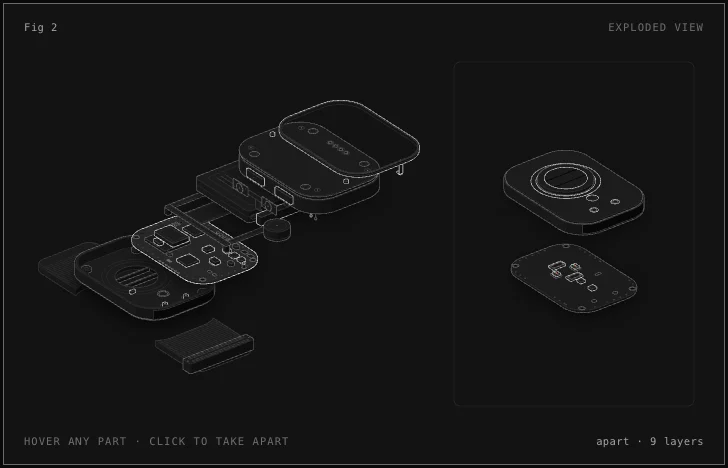
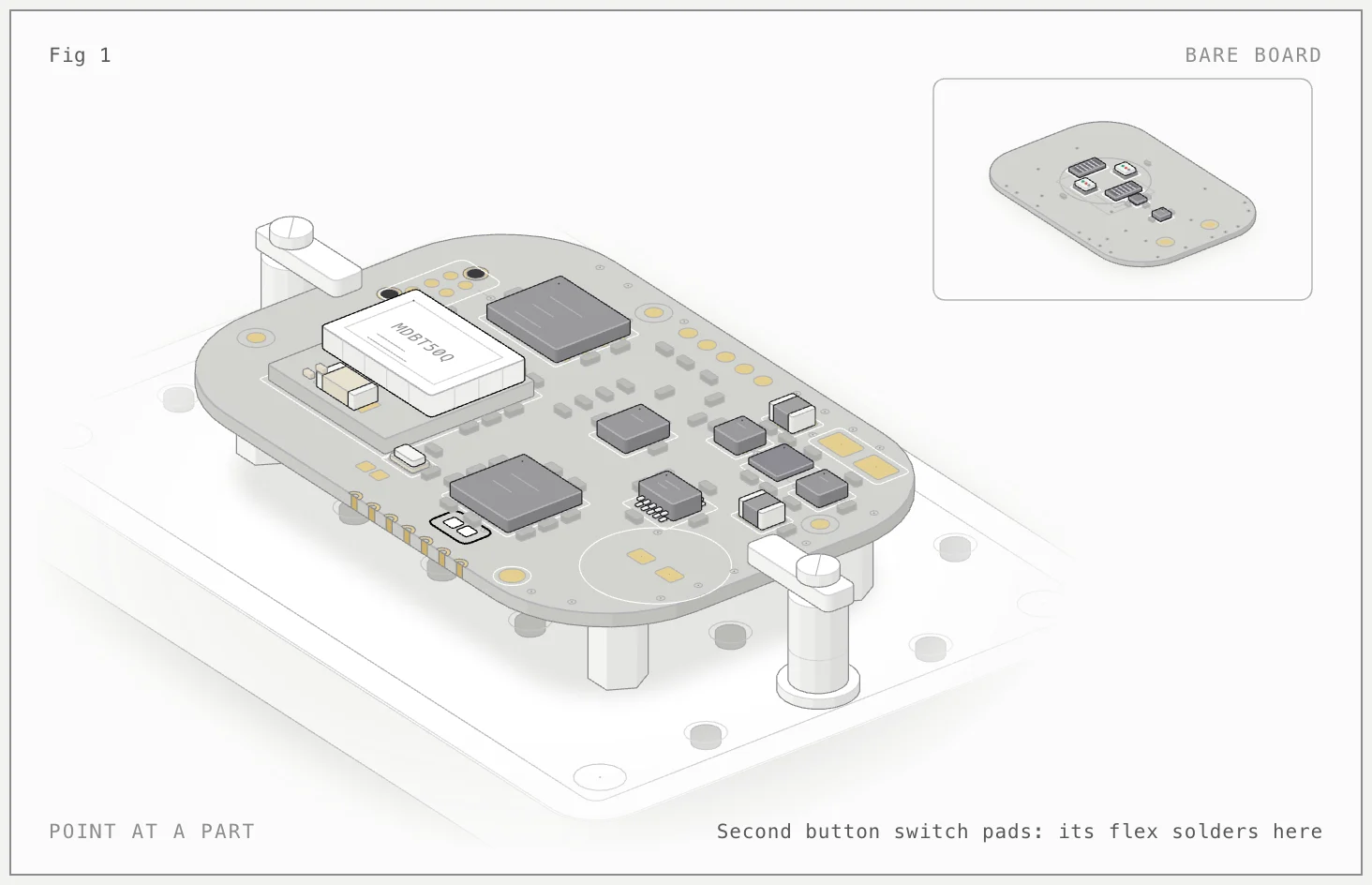
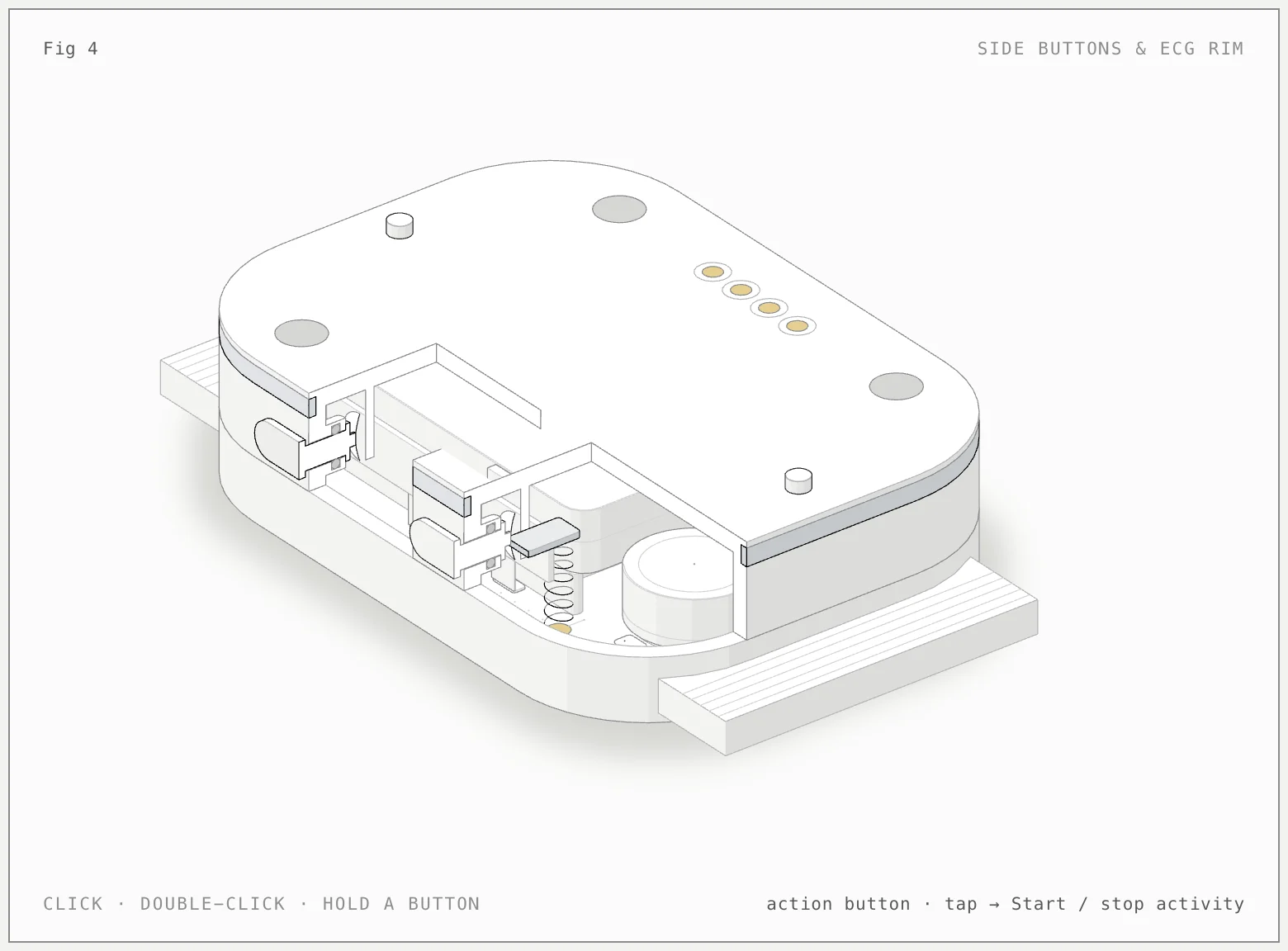
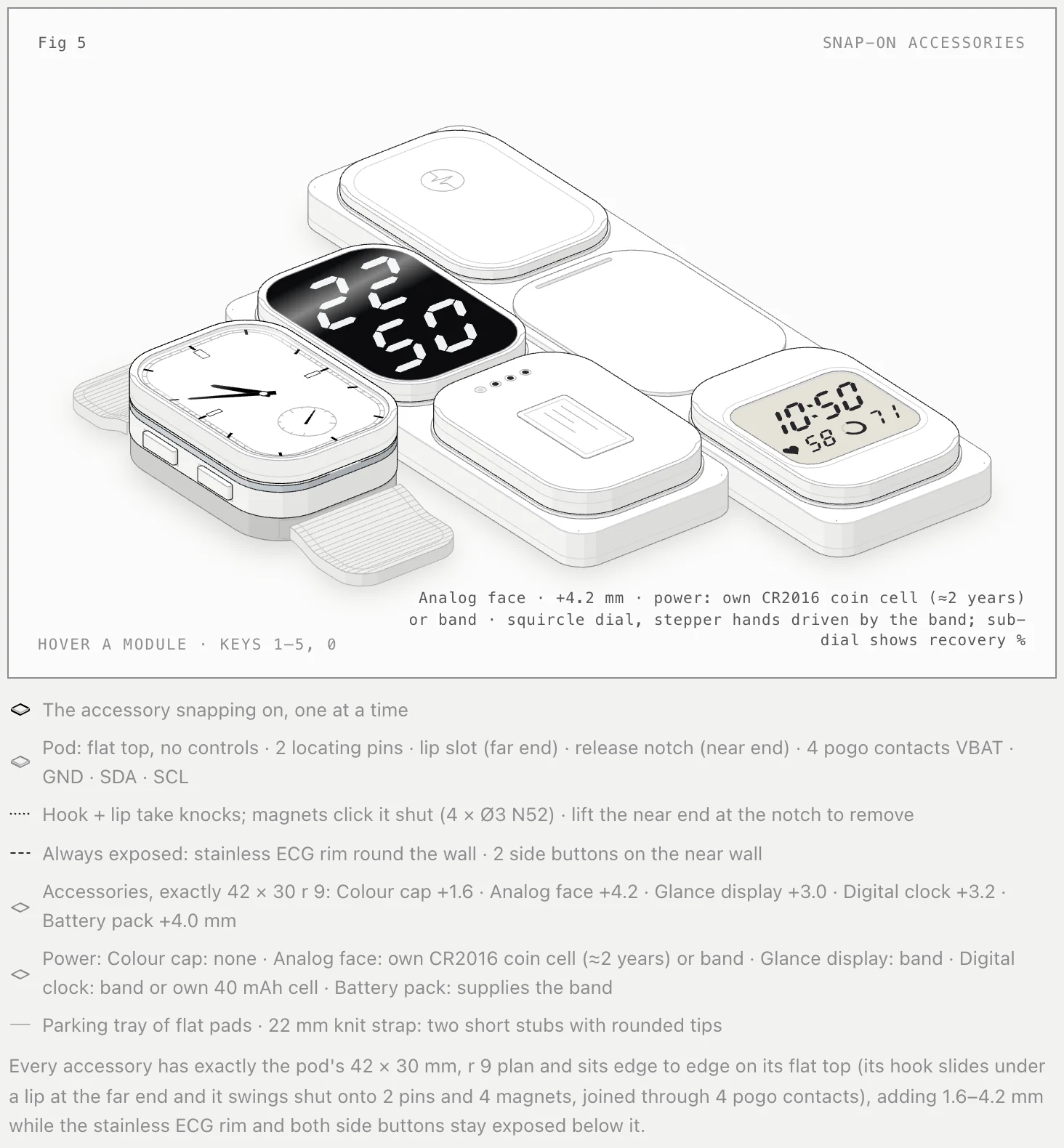
Figures drawn from the design's real dimensions. Status: Rev 0 development board being designed; nothing is for sale. Design notes and bill of materials on GitHub.